Introduction
Social media has become an integral part of our everyday lives. Platforms such as Instagram, Facebook, WhatsApp, YouTube, and Snapchat have transformed the way we communicate, share experiences, access information, and build relationships. With just a few clicks, we can connect with people across the world, explore new ideas, and stay updated about current events.
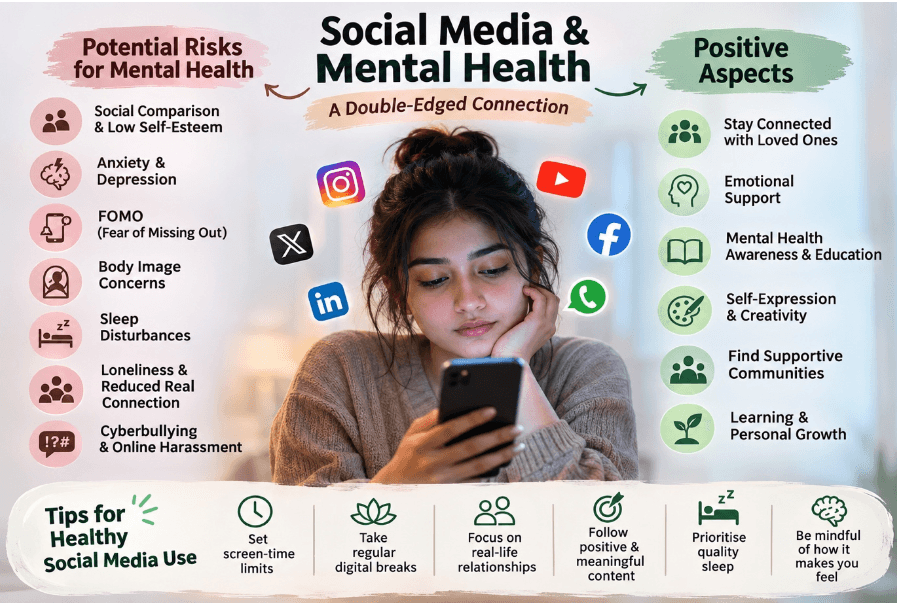
However, while social media offers several benefits, its increasing use has also raised concerns about its impact on mental health. Anxiety, depression, loneliness, low self-esteem, body image concerns, and sleep disturbances are some of the psychological challenges associated with unhealthy social media habits.
The important question is not whether social media is good or bad, but how our relationship with it influences our psychological well-being.
1. Social Comparison and Low Self-Esteem
One of the most significant psychological effects of social media is social comparison.
People often share carefully selected moments of their lives, including holidays, achievements, celebrations, relationships, and professional success. As a result, users may begin comparing their everyday experiences with the seemingly perfect lives of others.
For example, a person scrolling through Instagram may see pictures of successful professionals, happy couples, luxurious holidays, and physically attractive individuals. Over time, this comparison can create feelings of inadequacy, jealousy, dissatisfaction, and low self-worth.
It is important to remember that social media usually presents a highlight reel rather than the complete reality of someone's life.
2. Anxiety and Depression
Excessive or problematic social media use may contribute to emotional distress in some individuals.
Constant notifications, pressure to respond immediately, fear of missing out, and the need to remain socially connected can create psychological stress.
Some individuals may experience:
· Persistent worry about online interactions.
· Anxiety when they cannot access their accounts.
· Feelings of sadness after comparing themselves with others.
· Emotional dependence on online validation.
· Reduced satisfaction with everyday life.
Social media use does not automatically cause depression or anxiety. However, unhealthy patterns of use may intensify existing emotional difficulties, particularly among vulnerable individuals.
3. Fear of Missing Out (FOMO)
Fear of Missing Out, commonly known as FOMO, refers to the feeling that other people are enjoying exciting experiences, opportunities, or social activities without us.
Social media continuously exposes users to updates about parties, vacations, celebrations, achievements, and social gatherings.
This can create thoughts such as:
· "Everyone is enjoying life except me."
· "Why am I not invited?"
· "Am I missing important opportunities?"
· "Why is everyone more successful than I am?"
FOMO can increase anxiety, dissatisfaction, loneliness, and the urge to constantly check social media.
4. Body Image Issues and Appearance Anxiety
Social media platforms are filled with edited photographs, beauty filters, fitness transformations, and unrealistic appearance standards.
Repeated exposure to idealised images may influence how individuals perceive their bodies and physical appearance.
Young people, particularly adolescents, may become more conscious of their looks and develop unrealistic expectations about beauty and body shape.
This can contribute to:
· Body dissatisfaction.
· Negative self-image.
· Appearance-related anxiety.
· Unhealthy dieting behaviours.
· Reduced self-confidence.
Promoting body positivity, self-acceptance, and realistic representations of people is essential for healthier digital environments.
5. Sleep Disturbances and Digital Addiction
Many individuals develop the habit of scrolling through social media before sleeping or immediately after waking up.
Late-night screen use can delay bedtime, while stimulating content and notifications may make it difficult to relax.
Poor sleep can affect emotional regulation, concentration, memory, productivity, and overall psychological health.
Some individuals also experience difficulty controlling their social media use, repeatedly checking applications even when they have other responsibilities.
This may interfere with academic performance, professional commitments, relationships, and daily routines.
6. Loneliness and Reduced Face-to-Face Interaction
Although social media makes communication easier, online interaction does not always provide the emotional depth of meaningful face-to-face relationships.
An individual may have thousands of online followers but still experience loneliness and emotional disconnection.
Excessive reliance on digital communication may reduce opportunities for meaningful conversations, shared activities, and real-world social connections.
Healthy relationships require emotional availability, active listening, empathy, and genuine human interaction.
7. Cyberbullying and Online Harassment
Cyberbullying is another serious concern associated with social media.
Negative comments, online threats, public humiliation, trolling, body shaming, and the circulation of private information can have significant psychological consequences.
Victims may experience:
· Fear and emotional distress.
· Social withdrawal.
· Low self-esteem.
· Anxiety and depressive symptoms.
· Difficulty trusting others.
It is important to encourage individuals to report online harassment, maintain digital boundaries, and seek professional support when necessary.
8. The Positive Effects of Social Media on Mental Health
Despite its challenges, social media is not entirely negative. When used responsibly, it can offer several psychological and social benefits.
Some positive effects include:
· Social connection: Helps individuals stay connected with friends, family, and communities.
· Emotional support: Provides opportunities to connect with people experiencing similar challenges.
· Mental health awareness: Spreads information about psychological disorders, emotional well-being, and professional support.
· Self-expression: Allows individuals to share their thoughts, creativity, interests, and experiences.· Educational opportunities: Provides access to psychological resources, learning materials, and awareness campaigns.· Reduced isolation: Can help people who experience social isolation find supportive communities.
Research suggests that the impact of social media depends on individual characteristics, the type of content consumed, and patterns of engagement.
9. How Can We Maintain a Healthy Relationship with Social Media?
Completely avoiding social media may not be practical in today's digital world. Instead, developing healthy digital habits can help protect psychological well-being.
Here are some practical strategies:
1. Set Screen-Time Boundaries
Establish specific periods for social media use. Avoid unnecessary scrolling and take regular digital breaks.
2. Avoid Social Comparison
Remind yourself that social media reflects selected moments rather than someone's complete life story.
3. Follow Positive and Educational Content
Choose accounts that promote mental health awareness, personal growth, education, body positivity, and emotional well-being.
4. Practise Digital Detox
Spend some time away from social media every day. Use this time for reading, exercising, hobbies, or connecting with loved ones.
5. Prioritise Sleep
Avoid using social media close to bedtime. Keep your phone away while sleeping to minimise distractions.
6. Strengthen Real-Life Relationships
Make time for meaningful conversations, family activities, friendships, and face-to-face interactions.
7. Be Mindful of Your Emotions
Pay attention to how you feel after using social media. If certain accounts or content consistently make you anxious, insecure, or unhappy, consider unfollowing or muting them.
8. Seek Professional Support
If social media use begins affecting your sleep, relationships, academic performance, work, or emotional well-being, consider consulting a qualified mental health professional.
10. The Role of Parents and Educators in Promoting Digital Well-being
Children and adolescents are particularly vulnerable to certain online experiences because they are still developing emotional regulation, decision-making, and self-identity.
Parents, teachers, and educational institutions can play an important role in promoting responsible digital behaviour.
Some helpful approaches include:
· Encouraging open conversations about online experiences.
· Teaching children about cyberbullying and online safety.
· Promoting age-appropriate screen-time boundaries.
· Encouraging outdoor activities, sports, and hobbies.
· Developing digital literacy and critical thinking skills.
· Recognising early signs of emotional distress.
· Encouraging children to seek help without fear of judgement.
Rather than simply restricting social media, adults should help young people develop the skills to navigate the digital world safely and responsibly.
Conclusion: Use Social Media, Don't Let It Use You
Social media has become an inseparable part of modern life. It has the power to connect people, spread awareness, provide education, and create opportunities. However, excessive or unhealthy engagement can also affect emotional well-being, self-esteem, relationships, and psychological health.The solution is not necessarily to disconnect from the digital world but to develop a healthier relationship with it.We must learn to recognise the difference between online validation and genuine self-worth, digital connections and meaningful relationships, and social media engagement and real-life happiness.Remember: Your worth is not determined by your followers, likes, comments, or views. Your mental health matters more than your online presence.Take a moment to disconnect from your screen and reconnect with yourself.Because a healthy mind is more important than a perfect social media profile.